Already Burning

The most profound realization available to a human mind is not that it is remarkable. It is that the "self" it has spent a lifetime defending is not a thing at all. It is an unfolding, a rapid assembly of momentary events woven together so seamlessly that the result feels like a solid center behind the eyes, a someone who is authoring this life. But the center is not generating the experience. The experience is generating the center.
It is like asking a flame to light its own origin. The fire illumines everything around it, yet it can never turn back on itself. In the same way, the mind that constructs the self can survey the whole world it shapes, but it cannot easily see its own making because what it calls "the observer" is itself a product of the same unfolding it is trying to observe. This is the narrowest stretch of the path. Every contemplative tradition insists it can still be walked.
The word Buddha simply means one who has woken from the dream of a separate self. In Islam, surrender is the same gesture, not to an outside ruler but to a truth vaster than personal will. In Christianity, the invitation to lose your life so you may truly find it points to the identical release. These are not rival paths. They are different streams flowing into one ocean. What we are asked to release is not life itself, but the stubborn belief in a fixed "I" at its core.
To see how that belief takes root, it helps to look closely at the way experience actually comes together.
You have six doors through which experience arrives: the eye, ear, nose, tongue, body, and mind, known as saḷāyatana. These doors never shut. Moment after moment, contact arises, phassa, the instant a sense meets its object and awareness sparks at the meeting point. That spark arrives already tinged with a feeling tone, vedanā, pleasant, unpleasant, or neutral, before thought has time to appear. From that tone comes recognition, saññā, the mind's instant naming and sorting. And from recognition arises intention, cetanā, the subtle lean toward, pull away, or quiet resting. All of this happens in rapid succession across every door, far faster than we can track.
Picture a film running through a projector. Each frame is a single still image. Run them quickly enough and the screen seems to hold moving people, stories, emotions. The movie exists nowhere on any one frame; it lives only in the seamless flow between them. The six sense doors work exactly like this. Each contact is one frame. Each feeling tone is one pulse of light. Played together without pause, they create the vivid sense of a continuous self living in a continuous world. The "me" is not the filmmaker. The "me" is what the film projects.
Take a simple moment: a flower drifts into view. Light touches the eye. Awareness flashes at the contact. Before any decision is made, the mind has already colored the image with memory, named it beautiful or ordinary, and sent a quiet impulse through the body to draw closer and linger in the pleasure. This is the mind sustaining its own story, not merely to survive but to keep alive the feeling of being a someone to whom good things happen. What seems "out there" is never quite what we meet. We only ever encounter the mind's own rendering. That is why the senses can be fooled by illusions. So the real question arises: what, if anything, truly is?
Anicca
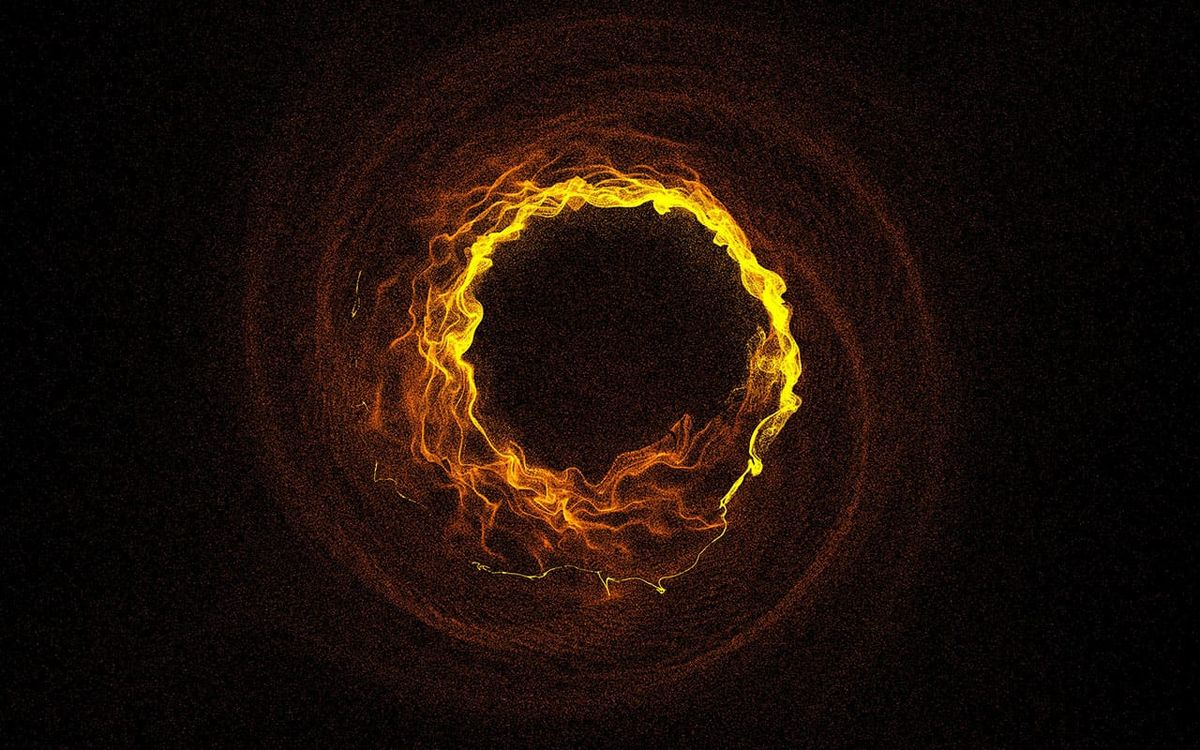
Look at a candle flame. It appears as one steady, whole presence. Yet it is not. What we call the flame is a rapid series of tiny combustion events, each arising and vanishing in an instant, each consuming its fuel before the next takes its place. There is no permanent flame, only the activity of burning, happening so swiftly that the gaps vanish from sight. Slow the process and you would see distinct flickers, each born and gone in its own moment. Speed it up again and it looks solid and enduring.
This is anicca. Phenomena do not outlast the conditions that give them rise. The flame the eye sees has already changed by the time the mind names it. The pleasant feeling has already begun to fade as the wish for more of it forms. By stitching these passing moments into a single story, the mind creates the sense of time and of a self traveling through it. Time, like the flame, is only a label placed on a ceaseless flow. Nothing inside it holds. There is only arising and passing, dependent and conditional, all the way down.
Dukkha
From this truth flows something the mind seldom notices on its own. What is actually fleeting is treated as stable, trustworthy, controllable. The mind clings to each moment as though it could endure. It reaches, holds, and attaches again and again, not occasionally but by design. The candle flame must keep burning or it ceases. It cannot rest. The mind follows the same law: it grasps at each fresh moment to keep the sense of self alive, and the instant one moment is spent it reaches for the next. The burning feels like living, yet it can never arrive at the permanence it craves, because nothing in this flow can be held.
This is dukkha. It includes the pain of loss and sorrow, but it points deeper. It is the built-in friction of trying to find lasting peace inside passing events. A wheel with a slightly off-center axle still turns, but every revolution creates a catch. The catch is not a mistake; it is the natural result of the design. The discomfort lives not in what happens, but in how tightly we try to hold on.
Anattā
So who is doing all the reaching, labeling, and grasping?
Modern physics echoes this question in a striking way. Relativity showed there is no privileged observer outside the system. Every viewpoint is relational. Quantum insights went further: at the smallest scale, particles have no fixed properties apart from how they are observed. What we find when we look closely is not solid objects but interacting fields of energy. The electromagnetic field, the Higgs field, the gravitational field. When conditions meet, those fields appear as particles, atoms, bodies. When conditions change, the appearance disperses. Werner Heisenberg expressed it precisely: "What we observe is not nature itself, but nature exposed to our method of questioning." These are not spiritual claims. They are empirical findings. Yet they arrive at the same threshold.
The Dhamma's answer is the hardest to receive, and the most freeing: no one. There is no hidden owner behind the unfolding. Not "your" mind or "my" mind. Just mind. Just activity. The six doors receiving, feelings coloring, perceptions naming, intentions moving, consciousness flickering. The viewer watching the film believes they sit apart from the screen. In the mind's case, the viewer is one more image on the screen. This is anattā. The same misapprehension that imputes unity to external objects imputes ownership and permanence to mental events. Feelings, perceptions, and intentions arise and pass without a lasting master. It does not mean you stop existing in the everyday sense. It means the fixed, independent center you once believed in is itself dependent, appearing and passing, empty of any solid core. Everything that presents itself, from a single thought to a distant galaxy, is energy interacting within fields of dependent arising. When those conditions shift, neither flame nor self remains as a separate essence. Understanding this is what the Buddha called right knowledge. And this knowledge must dawn inside the very confusion it unravels.
Liberation
The whole construction of self is so seamless because it is woven from perception itself. As long as attention moves outward, it finds only more things to claim, more stories to defend, more futures to chase. Every endeavor that begins with "I" strengthens the architecture and deepens the sense of separation. In truth, we are all the same unfolding. Energy condensed into momentary forms, appearing as separate selves. There is no outside realm to flee toward. The shift can only happen here, inside the very awareness that once mistook itself for a fragment.
And yet the same mind that spins the illusion of self is also capable of seeing through it. Understanding the Dhamma is not acquiring new information. It is a shift in how experience is received. The moments keep arising. The sense doors stay open. But the mind that once fused them into a solid "me" now sees them clearly: fleeting, dependent, empty of any permanent center. The tight grip softens. The constant labeling quiets. The frantic pursuit of something lasting eases.
Return to the flame. It still dances. Nothing about the flame has changed. What has changed is the seeing. You now notice the constant appearing and vanishing, the fuel it consumes to keep going, and the simple fact that there is no "flame" apart from the burning. Nothing is lost. Everything is revealed. And yet the flame, by its nature, can only show you what passes. To see what remains, look at the water.
Now drop a stone into a still pond. Ripples spread outward from the point of contact, each one a memory of an event that has already passed. The stone is gone, settled at the bottom, yet the surface carries its impression onward, ring after ring, as though the disturbance were still happening. This is how the sense of self perpetuates. Each contact through the sense doors is a stone. Each ripple is the cascade of feeling, recognition, and intention spreading from the point of impact. What we call "me" is the pattern of ripples, not the water. The disturbance looks continuous. It looks like a someone. But the water beneath was never actually disturbed. It was still the entire time.
Stillness was here before the burning began. Not emptiness. Not the absence of life. The ground it was always moving through. It was still before the first stone fell, and it will be still after the last one settles. That is not a description of peace to be attained. It is a description of what was here the entire time.