The Bodhi Tree's True Significance

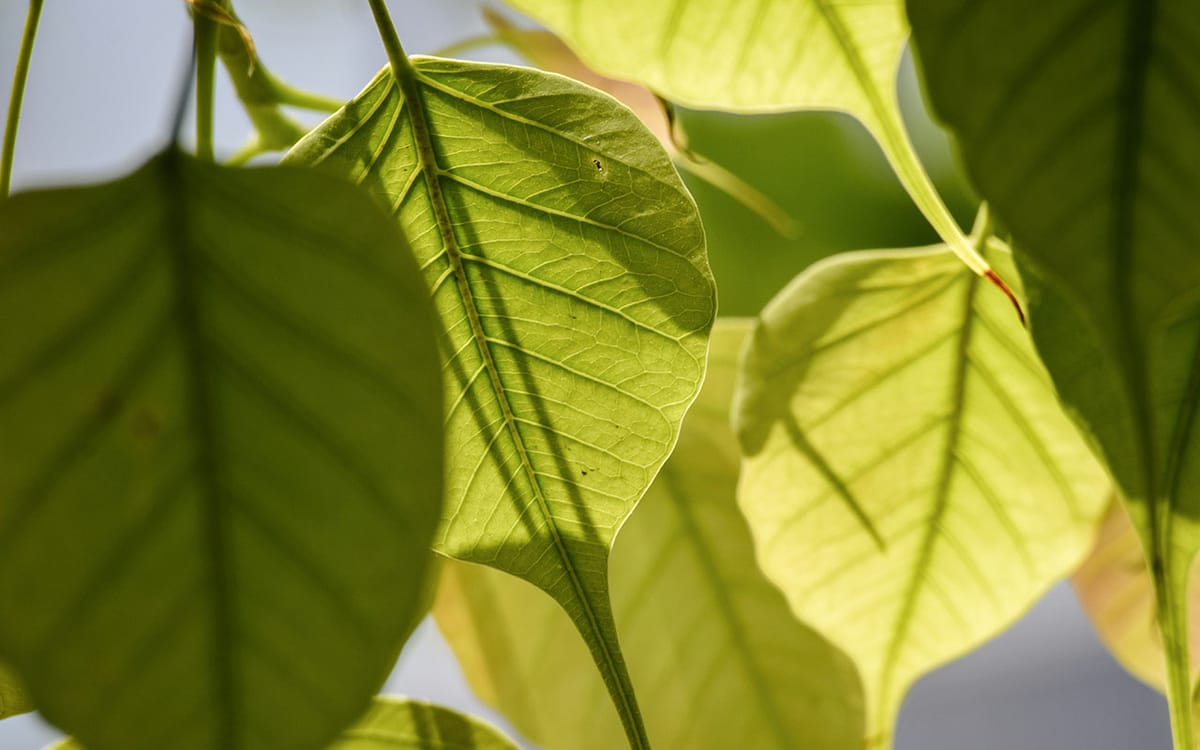
In Buddhist tradition, the Bodhi tree (Ficus religiosa), the sacred fig under which Siddhartha Gautama attained enlightenment and became the Buddha, holds profound symbolic importance. Yet its choice seems paradoxical: trees offer only temporary shelter from rain or sun, and the ancient fig was neither the largest nor the sturdiest in the forest. Why, then, did the Buddha select this seemingly ordinary tree in his quest for ultimate truth?
This invites deeper contemplation within Lokottara Dhamma—the supramundane teachings that transcend the cycle of ignorance and attachment, which leads to suffering. My own insight emerged while walking through Oregon’s lush forests, with towering trees iconic enough to feature on the state’s license plates. As I sat in a park, I sought an everyday metaphor to grasp these principles, and trees proved ideal: abundant, vivid, and accessible, they vividly illustrate Anicca, Dukkha, and Anatta across their varying forms and slow-motion cycles.
Anicca
All things are in a constant state of flux, naturally desiring to return to their original form, but requiring continual energy to maintain their current state. A tree’s life exemplifies this: sprouting from a seed, growing branches and leaves, then shedding them seasonally. Roots shift, and forms bend to the wind and rain. These formations arise only to fulfill conditioned needs. Clinging to them as permanent ignores their inherent tendency to decay and return to chaos.
Dukkha
There are no permanently fixed entities—only temporary aggregations arising to fulfill conditioned needs. An ignorant mind perceives a tree as a singular, unchanging entity, but it arises interdependently from soil, water, and sunlight. A tree appears solid, yet it is merely a composite of roots, trunk, branches, leaves, and bark. It endures droughts, storms, and pests; its shade and fruit are fleeting and conditional.
Anatta
Because of craving and ignorance, these formations are misconceived as separate and permanent, regardless of whether they are experienced as good or bad, positive or negative, and thus become objects of clinging. Remove any cause, and the “tree” dissolves—a mere designation for aggregated parts. This mirrors our illusion of a permanent “I,” born from the five aggregates. Observing trees dismantles this delusion, revealing all dhammas as empty of inherent self.
The Bodhi Tree as a Metaphor for Liberation
The tree’s photosynthesis reflects the law of interdependence, showing how energy arises through a chain of conditions with no independent, enduring source. Sunlight, water, and carbon converge into energy, circulating through leaves, roots, and broader ecological systems. Each phase of this process is conditioned; it arises only when the necessary factors are present and ceases when they are not. This mirrors the concept of Paticca Samuppada, or conditioned arising, where every phenomenon depends on relational causes and effects. The tree, then, is not a static object but a dynamic illustration of interconnectedness. It shows that all things, including us, are continuously arising and dissolving, bound by the laws of interdependence, with no permanent self—only a process that gives the illusion of one.
In this way, the Bodhi tree embodies the essence of the Dhamma, not just as a place of personal enlightenment but as a living metaphor for the interconnected nature of all things. Siddhartha Gautama’s realization didn’t stem from simply sitting beneath the tree but from understanding the deep truth that the tree symbolized: impermanence, interdependence, and the empty nature of self. The tree itself was a silent teacher, guiding his mind toward liberation. Its stillness reflects the awakened mind: unshaken, unfixed, and untethered to the transient conditions of the world, yet fully engaged with them.
Now you may find yourself wondering why the Buddha selected a fig tree, and especially this specific kind. While I have my own reflections, rather than offering a definitive answer, I encourage you to explore and find your own meaning.