The Pond of Golden Light

There was once a meadow called Stillmere, green and quiet, centered around a deep, clear pond fed by an underground spring. The pond kept everything alive. Beneath the meadow lived a family of moles, and for as long as any of them could remember, worm farming was what sustained the colony. The moles tended the soil. The soil, when cared for, drew the worms in. The worms fed the moles. No one had designed it. It simply worked, the way breathing works, and every generation taught the next how to keep it going through feel alone.
Andros was the father. He knew the earth the way a sailor knows the sea, not by looking but by pressure, scent, and the faint tremor of water moving through soil far below. He could press his nose to a tunnel wall and tell you whether the worms had shifted east, whether the soil needed loosening, whether the roots above were oak or ash. Temera, his partner, read the air, sensing storms through the fine hairs on her snout before the first cloud formed. Sophra, their daughter, was small and quiet and loved learning everything her parents did. She followed Andros through the tunnels mimicking how he pressed his nose to the walls, and sat beside Temera in the evenings trying to feel the air the way her mother did. She did not know very much. But she paid attention to everything, and there is a difference between knowing things and understanding them that most adults have forgotten. She would come home with clay under her claws and dirt on her nose, exhausted and happy, and fall asleep wanting more of it.
Their tunnel network had been shaped by generations, every curve following the logic of touch, walls angled to guide you by feel in total darkness, floors sloped so your paws knew which direction was home without thinking. The tunnels were their plantation, and the knowledge of how to tend them was the most valuable thing they owned.
They could not see. They had never needed to.
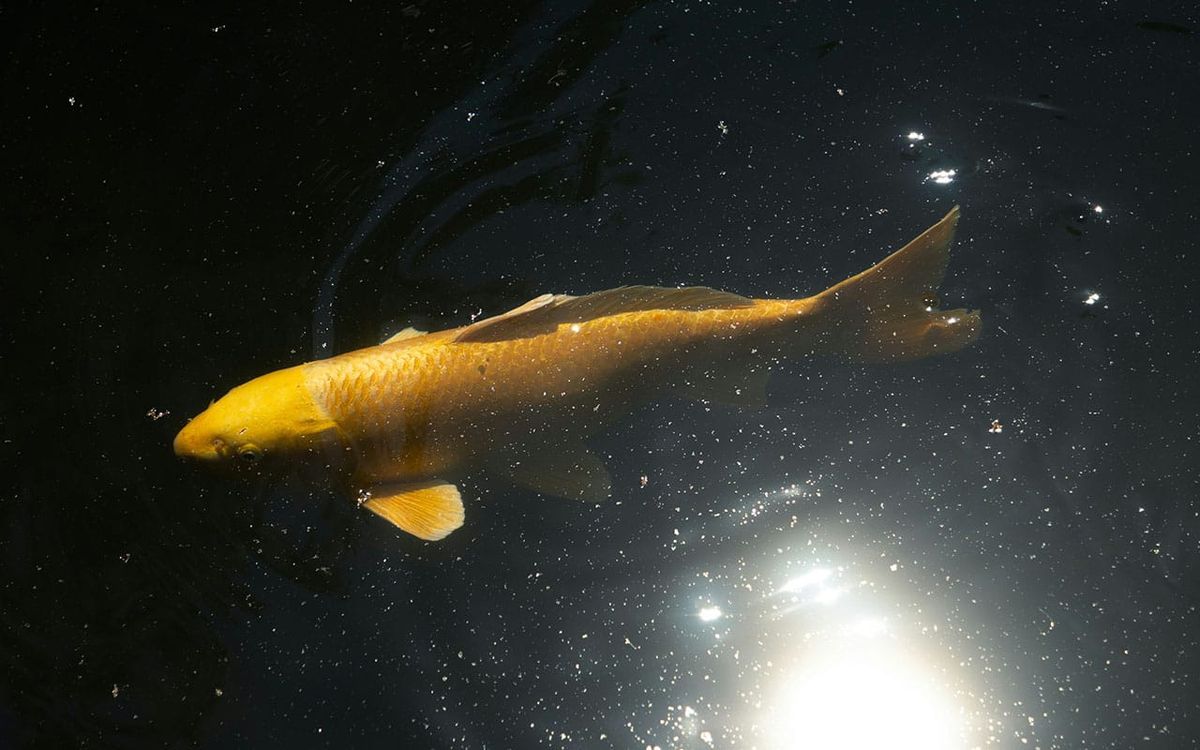
One morning, while Andros was digging near the pond's edge, a voice called out from the water. It belonged to a fish, golden and luminous, unlike anything that had ever lived in the pond before, who said its name was Vero. It spoke of something Andros had never heard of. Sight, it called it. The ability to know what lay ahead without touching it. To perceive color, distance, shape. Andros listened, skeptical. He had managed the tunnels his whole life without such a thing. But Vero was patient. It described what green looked like, how light moved across water, how a father might see his daughter's face for the first time. The cost would be almost nothing. A drop of pond water each day. The pond was deep and full. It seemed like nothing at all.
Andros hesitated for two days. On the third, he said yes.
What followed exceeded everything Vero had promised. The meadow was not just visible, it was radiant. Andros could see where the soil was moist and where it was dry without pressing his nose to anything. He could spot where worms clustered from a distance, find weaknesses in the tunnel structure before they became collapses. It was faster, clearer, and by every measure he could think of, better than anything he had imagined.
Each time, Vero offered. Each time, Andros agreed. Where are the worms thickest? How should the eastern tunnels be dug? What should the worm grounds look like next season? Every answer was rational. Every instruction worked. Under Vero's guidance Andros rebuilt the tunnels, wider, straighter, smooth-walled, with shafts angled to carry light deep underground. The old curved walls were straightened. The sloped floors were leveled. The rough textures were polished away.
One evening, Sophra tugged at her father's arm.
"Papa, can we dig the old way tomorrow? I liked when we felt for the worms together. When you showed me how to listen to the roots."
"Why would we do that?" Andros said. "This is better. We find twice the worms in half the time."
Sophra went silent.
The senses dimmed the way a muscle dims when it is no longer used. Andros stopped pressing his nose to the walls because sight was faster. He stopped feeling vibrations through the tunnel floor because Vero's instructions were more precise.
As the seasons passed, the instructions grew more elaborate. What had started as simple guidance became intricate plans for tiered chambers, rerouted worm grounds, drainage systems that linked to other drainage systems. Each new layer of complexity depended on the one before it, and each demanded more from the pond. What had once cost a drop now cost a bucket.
Temera found him one evening studying the layout of a new drainage channel Vero had designed.
"We are a family of three," she said quietly. "We had enough before any of this."
Andros smiled at her the way you smile at someone who does not understand what they are looking at. "This is not about enough," he said. "This is about what is possible."
He did not notice the water dropping. He was too busy building. When he needed the next instruction he would simply call out toward the pond without even walking to the edge. The answers always came. There was always more to build.
It was Sophra who stood at the waterline one afternoon and saw the ring of dry mud that had not been there before.
"Papa," she said. "The water is dropping."
Andros looked up, irritated. "Not now, Sophra."
"But it is lower than it was. Much lower."
"You are a child," he snapped. "Vero says the levels fluctuate. Go and play."
She did not go and play. She sat at the pond's edge and watched the water sink.
The soil dried. The worms retreated deeper than the tunnels could follow. The beautiful new walls cracked as the ground contracted. The old tunnels would have flexed. Their curves redirected force. Their rough surfaces distributed pressure. They were ugly and slow, but they were resilient. What replaced them was elegant and fragile.
Andros had not pressed his nose to a tunnel wall in months. Vero's instructions told him everything. So when the worms thinned and the soil cracked, he did not feel it the way he once would have. He saw it dimly, the way you notice a change in weather through a window. He decided to go to the pond and ask Vero what to do.
As he approached, he heard something he had never heard before: a heavy, wet slapping against mud.
He stopped at the edge of what had been the pond and could not move. The water was nearly gone. A shallow film of it sat at the bottom of the basin, and in it lay something that took him a moment to recognize. Vero had grown. Fed by all that water, season after season, it had become large and swollen, its golden light so fierce it hurt to look at directly. This bloated, luminous creature lay on its side in a puddle barely deep enough to wet its scales, gills heaving, tail slapping against the mud in slow, heavy strokes. Around the basin, the meadow was brown and flat and silent.
Andros's legs buckled. He sat down hard in the dry mud.
Even now, gasping, Vero spoke.
"Tell me what you need. I can still help. I have a few more instructions left in me."
"Can't you see there is no water left?" Andros said.
"Don't worry about me. Just tell me what you want to do next. I am here for you."
The fish could not stop. It was built to give instructions, and it would keep giving them until the last drop was gone and its gills stopped moving. It would consume what kept it alive and offer more with its dying breath.
Everything he had built, every instruction he had followed, every rational yes he had given, had led here. A dead meadow. A dying fish that had grown fat on the water it drained. He tried to feel something. Grief, regret, anger. But the feelings came slowly, muffled, as though they too had atrophied from disuse. He had to reach deep into himself the way the dying fish was reaching for the last of the water. Searching for something that was almost gone.
Then Sophra was beside him.
"You used to talk to the earth, Papa," she said. "I loved it when you did."
Something cracked open in him. Not wisdom. Not clarity. Just the raw, unguarded weight of what he had lost. They sat together as Vero's light flickered once more and went out. The fish lay still at the center of the pond it had drained, luminous and heavy and lifeless.
"What do we do now?" Sophra asked.
"We have to find another meadow," Andros said. "Somewhere with water and soil that can still hold worms."
"Will we find one?"
"That is not what worries me." He paused. "I don't know if I remember how to farm."
Sophra was quiet for a moment. Then she looked up at him.
"Can we learn again? Together?"
Andros looked at her. At this small, eager child who had kept pressing her nose to the walls long after he had stopped, who had asked to dig the old way and been told no, who had warned him about the water and been dismissed. He pulled her close and held her.
"Maybe," he said. "We can only try."
"I hope so," Sophra said.
The pond was empty. The soil was dry. The cycle that had sustained the colony for as long as any mole could remember, the one no one had designed, the one that simply worked, had been broken. And sitting beside it, a father and his daughter, one who had forgotten how to listen and one who never stopped.