Time, Self, and Perception: A Buddhist Lens on Relativity

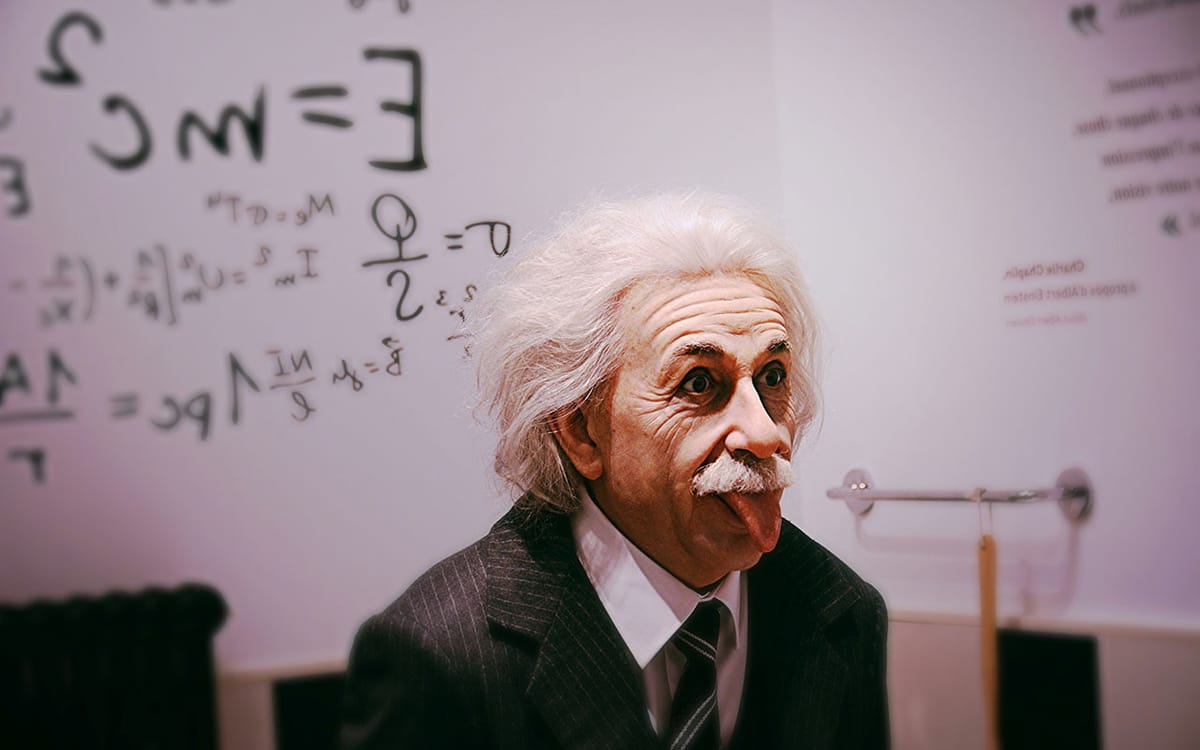
Modern physics, particularly Einstein’s general theory of relativity, shows that reality is not composed of fixed objects moving through absolute space and time. Instead, physical description is fundamentally relational. Time behaves differently in the presence of mass and energy, simultaneity depends on the observer’s frame, and no single perspective is privileged. Science arrives at these conclusions through mathematical formalism and measurement. Lokottara Dhamma approaches a closely related insight from a different starting point: direct observation of experience grounded in conditionality.
These approaches operate on distinct but complementary levels of inquiry. Physics describes measurable external phenomena: how spacetime curves, how matter and energy condition geometry, and why observers in different frames disagree about events. In doing so, it intentionally brackets the immediacy of lived experience—the felt sense that “this is happening now.” Lokottara Dhamma begins precisely from that immediacy. It examines how conditioned mental processes give rise to the appearance of continuity, a present moment, and a central standpoint, without positing an enduring or independent self.
Considered alongside general relativity, Lokottara Dhamma neither replaces nor revises physical theory. It extends inquiry into a domain that physics sets aside: the structure of cognition and knowing. Together, they illuminate a single reality from two irreducible perspectives, one structural and mathematical, the other experiential and liberative.
Relativity and the Loss of Absolute Time
General relativity shows that time is not a universal, uniform flow. It dilates near massive bodies, slows with relative velocity, and diverges across reference frames. Events that are simultaneous in one frame may not be simultaneous in another. The notion of a single, objectively privileged present therefore lacks physical foundation.
Einstein captured this implication when he remarked that “the distinction between past, present, and future is only a stubbornly persistent illusion.” Physics can model this implication mathematically, for example in block-universe interpretations. What it does not address is why experience nonetheless unfolds as a flowing, sequential “now” that feels personally owned. That question lies outside the scope of physical description. Lokottara Dhamma takes it up directly.
Momentariness and the Construction of Time
In Buddhist analysis, experience consists of discrete, conditioned moments of consciousness (cittas). Each arises due to causes, performs its function, and ceases immediately. There is no enduring mental substance that persists unchanged beneath this process. Apparent continuity arises only through rapid succession governed by conditional relations.
From this standpoint, time is not an external container through which consciousness moves. It is a conceptual structure assembled through sequential cognition. This does not replicate the claims of relativity, but it resonates with its implications: events exist relationally rather than along a single absolute timeline. Lokottara Dhamma explains why experience nevertheless appears ordered and flowing. Successive cittas are linked by conditions, and identification appropriates this conditioned sequence as a coherent personal narrative.
When perception is refined through insight practice, the apparent smoothness of experience weakens. What once appeared continuous reveals itself as a rapid series of arising and ceasing events. This directly exposes anicca, impermanence. Phenomena do not endure beyond the conditions that support them.
From this follows dukkha. Suffering does not arise simply because phenomena change, but because conditioned processes are taken to be stable, reliable, or controllable. An untrained mind apprehends a tree as a single enduring entity, yet closer examination reveals only conditional processes—growth, decay, form, and function—each dependent on innumerable supporting factors.
Anattā, non-self, completes the analysis. The same misapprehension that imputes unity to external objects imputes ownership and permanence to mental processes. Perception, feeling, and recognition are taken to be “I” or “mine,” despite arising and ceasing without mastery. When conditions dissolve, neither tree nor self remains as an independent essence.
Emergence and Contemporary Physics
A related insight into constructed stability appears in contemporary physics, though at a different level of analysis. Richard Feynman noted that quantum electrodynamics describes nature in ways that defy common sense while agreeing precisely with experiment. What appears stable and substantial at human scales emerges from interactions that are discrete, probabilistic, and relational. This is not the same claim made by the Dhamma, but it serves as a useful contrast: both accounts undermine naïve substance-based intuitions without appealing to the same explanatory aims.
Gravity, Conditionality, and Dependent Origination
Einstein’s account of gravity further illustrates this shift away from intrinsic entities. Gravity is not a force imposed upon objects from outside, but the curvature of spacetime itself, conditioned by mass and energy. There is no independent gravitational substance, only structured dependence.
This offers a philosophical parallel to paṭicca samuppāda, dependent origination. Phenomena arise, persist, and cease solely through conditions. When conditions are absent, the phenomenon does not continue. Both frameworks reject inherent existence and replace it with lawful conditionality, without collapsing one domain into the other.
The Self as a Functional Reference Frame
In physics, observers function as reference frames. They are indispensable for description, yet they are not privileged or absolute entities. Lokottara Dhamma examines how the sense of a central observer arises within experience itself. The self is not discovered as an entity, but understood as a functional designation applied to a nexus of conditioned processes—the aggregates—sufficient for practical navigation yet empty of intrinsic core.
This analysis aligns structurally with relativity’s rejection of absolute frames. Experience is not occurring to a separate subject standing outside phenomena. The sense of subjectivity arises through identification with conditioned processes themselves.
Max Planck once suggested that consciousness may be more fundamental than matter. Physics cannot operationalize or test such a claim. Lokottara Dhamma does not assert it metaphysically either, but provides a disciplined method for examining how awareness and subjectivity are experienced and misconstrued.
Complementary Perspectives on Reality
Lokottara Dhamma does not compete with relativity, nor does it attempt to ground physics in contemplative insight. It clarifies why reality appears stable, personal, and continuous despite being conditional, relational, and momentary.
- Science shows that time lacks absoluteness. Lokottara Dhamma examines how temporal flow is cognitively constructed.
- Science treats observers as reference frames. Lokottara Dhamma examines how subjectivity functions as a conditioned standpoint.
- Science reveals relational structure. Lokottara Dhamma explains how grasping transforms relations into apparent substances.
Neither contradicts the other. They address the same reality through distinct and irreducible lenses, one analytical and mathematical, the other experiential and liberative. No empirical findings are denied, and no speculative metaphysics is required.
As Einstein observed, a theory determines what we can observe. Altering the mode of observation can disclose different aspects of the same reality, without anything in that reality itself needing to change. The limits of a framework do not mark the limits of reality, only the limits of what that framework can disclose.
In this sense, insight does not compete with analysis. It operates where analysis naturally stops. Science and mathematics remain extraordinary tools—precise, powerful, and constrained. Lokottara Dhamma begins at the point where tools give way to direct seeing.