Wake Up, Neo – Part 2: Return to the Matrix

In Wake Up, Neo – Part 2, we return to the Matrix not as abstract theory, but through the film itself. Building on insights from Wake Up, Neo – Part 1 where I explored how the Matrix mirrors the first rupture of awakening—this part examines specific moments: the Agents, the Oracle, Neo’s rooftop leaps, and the frozen bullets. Each scene reflects the nature of reality through Buddhist Lokottara Dhamma. Each moment becomes a lens for seeing impermanence, non-self, and the mind’s construction of experience. Awakening is not an escape from the world; it is the deep recognition that nothing is fixed, nothing is owned, and perception itself is a process to be observed. The red pill does not open a door outward—it opens awareness within the dream, where true practice begins.
What follows is not doctrine. It is not the truth. It is a reflective walk through the film’s most striking scenes, each one a small lantern that lets me glimpse the invisible scaffolding of perception. In the Buddhist sense, the aim is not to arrive at a correct interpretation, but to notice how perception itself is constructed—and how it can be seen through.
As Morpheus says: The door can only be shown. Walking remains your own affair.
1. The Double Life – Thomas, Neo, and the Call of Sati
Thomas Anderson by day, Neo the hacker by night—two lives, two selves. This duality mirrors the early stages of awakening. We fulfill roles, follow routines, yet something quietly strains against the walls of what we are told is real.
When the phone rings—Morpheus calling, the Agents closing in—it is not just a plot device. It is sati: mindfulness, awareness calling us back from the dream. Each time Neo answers, he wakes. Each time he re-enters the Matrix, he forgets.
Awakening, at first, flickers—seen, lost, remembered again. Insight arises; conditioning returns. The cycle repeats. This is familiar in practice: clarity appears, habits reclaim their ground, and we begin again. The duality is the beginning of awakening—functioning within society while a quiet sense that “something is wrong” pulls us toward what is hidden.
2. The Mirror – Facing the Warped Self
When Neo first takes the red pill, he catches his reflection in a mirror—and it warps, stretches, and distorts unnaturally. His own image flickers and dissolves, a visual shock signaling that his old perception of reality is breaking apart. This is more than cinematic flair; it is a metaphor for the mind confronting its own constructions.
In Lokottara Dhamma, awakening begins with seeing through conditioned perception. What we take as “self” and “world” is continuously shaped by craving, ignorance, and habitual patterns. Neo’s distorted reflection embodies this truth: the apparent solidity of self is illusory, malleable, and contingent. The mirror does not lie; it reflects the processes of mind, revealing the gap between appearance and ultimate knowing.
Just as the Lokottara path does not grant freedom by removing the world, the red pill does not give Neo a new body or a new reality. Instead, it opens the eyes to the constructed nature of all appearances, preparing him to step into the Matrix with awareness that nothing solid ever existed in the first place. The warping of the mirror becomes a first glimpse of emptiness, a tangible encounter with the mind-made nature of phenomena, and the first threshold toward true liberation.
3. Morpheus – The Door and the Walker
Morpheus is not a savior. He is a condition.
“I can only show you the door. You’re the one that has to walk through it.”
In Lokottara terms, enlightenment cannot be given. It is not transferred. It is perceived. The teacher, the text, the friend merely create conditions. Neo learns that knowing the path is not the same as walking it—a lesson made concrete when his first rooftop jump fails.
Insight does not arrive as a single thunderclap. It deepens through repeated seeing, like light reflected through countless raindrops. Morpheus offers a direction; Neo must embody it.
Werner Heisenberg once observed:
“What we observe is not nature itself, but nature exposed to our method of questioning.”
Morpheus changes Neo’s question. The world remains, but the frame through which it is seen begins to dissolve.
4. The Agents – Guardians of the Ego
The Agents are often read as pure evil, especially Agent Smith. Yet Smith is not driven by hatred. He is driven by function. He is a guardian of the illusion arising from ignorance and attachment—the six senses insisting that this is reality.
Smith’s claim that humanity is a “virus” is not merely contempt. It reflects taṇhā, craving without awareness—desire that multiplies endlessly and devours its own ground.
In Buddhist psychology, these are the forces that feed the ego. The Agents are not individuals but processes. Each one represents a cognitive mechanism that protects identity and continuity. When Neo fights them, he is not battling metal; he is confronting conditioning, the reflexive defense of a false self.
To see through Smith is to realize that the oppressor is internal—the system that guards the comfort of identity.
5. The Oracle – Wisdom That Points, Not Proclaims
The Oracle tells Neo, gently, “I’m sorry, kid—you’re not the One.” She is not lying. At that moment, he is not.
Wisdom speaks to the mind that stands before it. The Oracle plants a seed by denying him certainty. She does not declare truth; she creates its condition. Later, when Neo awakens, her words no longer require correction. The separation between prophecy and reality dissolves.
This is prajñā: wisdom that reveals by unbinding, not by naming.
6. Bullet Time – The Freeze of Cittas
The film’s signature slow motion—the camera revolving around falling bullets—is a visual hymn to perception. In Buddhist thought, experience consists of discrete moments of consciousness (cittas). The mind stitches them together into the illusion of continuity.
“Bullet time” exposes that stitching. Motion loosens. Solidity falters. What seems continuous reveals itself as assembled. There is nothing truly frozen; reality is being reconstructed moment by moment through causes and effects.
Slow down and notice: the world does not move smoothly. It clicks, flickers, renews. What we call time is the mind arranging frames into a story.
Niels Bohr remarked:
“Everything we call real is made of things that cannot be regarded as real.”
The Matrix renders that insight visible. What appears solid is already a procession of events.
7. The Spoon – “There Is No Spoon”
A bald child in the Oracle’s apartment tells Neo, “There is no spoon.” He does not deny form. He denies inherent reality. The spoon does not bend—perception does.
This is suññatā: emptiness. Phenomena exist conventionally, but not independently or permanently. The world functions, but it does not solidify.
The children represent partial realization. They can manipulate illusion, play with it—but they have not fully transcended it. Insight, when incomplete, becomes another subtle attachment. Their realization is playful rather than liberating.
“There is no spoon” is not negation. It is clarity.
8. Trinity – Dhamma-Companionship and the End of Separation
Trinity’s devotion is not romantic salvation. It is kalyāṇa-mittatā—dhamma companionship. She provides the conditions for awakening.
When Neo “dies” and returns, it is not love that restores him. It is the collapse of belief in a separate self. What returns is awareness, no longer confined to “someone.”
9. Humans as Batteries – The Mind’s Self-Sustaining Dream
The revelation that humans power the machines is one of the film’s starkest images—and one of its most precise metaphors. Sensation, attachment, identity, and reaction feed a system that keeps the dream alive.
This feedback loop is saṃsāra. The Matrix makes it visible: the dream powers itself.
Max Planck wrote:
“I regard consciousness as fundamental. I regard matter as derivative from consciousness.”
The film visualizes this mercilessly. Mind dreams the world, then feeds upon it. Delusion sustains itself—until insight cuts the circuit.
Erwin Schrödinger echoed this from another angle:
“The total number of minds in the universe is one. In fact, consciousness is a singularity phasing within all beings.”
What the Matrix dramatizes is the same paradox: the world appears external, yet it is inseparable from the mind that knows it.
10. Cypher – The Temptation of Ignorance
Cypher voices a truth many feel but rarely admit: “Ignorance is bliss.” His choice reveals that even knowledge of illusion can be bound by craving.
Once awareness has arisen, it leaves a mark. The lure of ignorance is a return to a known falsehood. Cypher does not choose freedom; he resists seeing.
11. The Final Vision – Code and Lokottara Ñāṇa
At the climax, Neo no longer sees people, bullets, or enemies. He sees only code—patterns, streams, processes. This is lokottara ñāṇa: transcendent knowing.
Phenomena are no longer stories or substances. They are aggregates—conditions flowing without owner. This aligns with anicca, dukkha, and anattā: all things are in a constant state of flux in their natural form (anicca); there are no permanently fixed entities, only temporary aggregations arising through conditions (dukkha); and craving, ignorance, and attachment sustain these formations by mistakenly regarding them as separate and permanent—thus worthy of clinging, whether pleasant or painful (anattā).
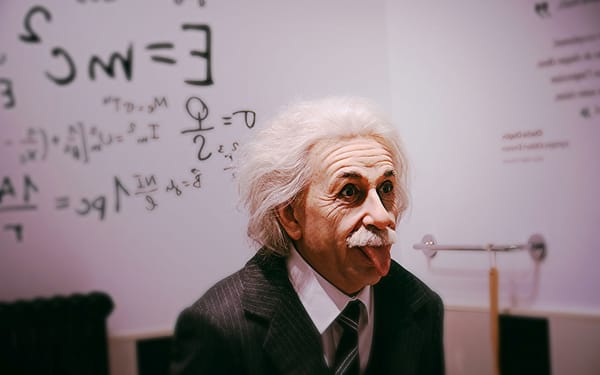
Albert Einstein once said:
“Reality is merely an illusion, albeit a very persistent one.”
Neo’s vision embodies that persistence breaking.
The battle ends not because the illusion is destroyed, but because it is no longer believed.
12. Living Free Within the World
Even after awakening, Neo’s body still bleeds. The crew lives simply. Insight does not erase conventional reality; it transforms the relationship to it.
One can abide by the world’s rules without being owned by them—freedom within form. Like a stream-enterer, the direction becomes irreversible, even as conditions continue to unfold according to cause and effect.
Final Reflections
The Matrix resonates because it mirrors a core insight of Lokottara Dhamma: the world we experience is not discovered—it is constructed by mind. Perception, time, identity, and suffering arise together, sustained by the same mechanism.
David Bohm wrote:
“The observer is the observed. The division between them is an illusion.”
This could serve as a single-line summary of both the film and the Dhamma. What we take to be “out there” is inseparable from the mind that knows it. The world appears solid because perception is habitual. It feels external because awareness has forgotten itself.
Liberation does not require escaping the world or destroying illusion. It only requires awareness to observe what has always been here—empty, transient, mind-made.
When Neo stops the bullets, the victory is not over machines, but over the assumption that appearances define what is. The environment remains intact; only its authority collapses. Morpheus can indicate the boundary between belief and insight, yet crossing it is irreducibly personal. The door has always been here, opening in every breath, every sight, every thought. Liberation is not elsewhere—it is the simple act of seeing what has never been owned.